About Millie

My photo
I animate, therefore I am a teacher. I teach, therefore I illustrate. I illustrate, therefore I draw on my environment. In drawing on my environment, I am animated!

Saturday, January 17, 2015

Survey on your experiences of Thai Animation


https://www.surveymonkey.com/s/8MDPYJ3
Please have a go filling in this survey that is asking respondents about their education, experiences of and work in the Thai animation industry. It is targeted mainly at People in Thailand and is in English and Thai but also can be filled in by others to find out what films you have experienced, if any! 
Thank you for your time. It takes about 30 minutes... 

Friday, October 24, 2014

An Historic Rendez Vous. By Millie Young


The Fine Applied Arts Division (FAA), Animation Production Major played host to an historic moment in their liaison with co- hosts the French Embassy in Thailand and the World Film Festival of Bangkok. On 16th October 2014 at SF World Cinema gathered animation professionals, educators, students and dignitaries from Thailand and France to open the first three day French-Thai Animation Rendez-vous. The Ambassadeur de France en Thaïlande, Monsieur Thierry Viteau, welcomed all and introduced the star of the three day master classes Les Gobelins alumini, former Dreamwork's animator and now an animation film director of his forthcoming feature film 'Mune', Mr. Alexandre Heboyan. Those present were invited to watch the premiere in Thailand of the charming French feature, 'Minuscule - Valley of The Lost Ants' directed by  T. Szabo and H, Giraud, in stereoscopic 3D, a tantalizing experience and one of the five French features in the World Bangkok Film Festival.


            Thailand's animation industry is still in its formative years, spurned on by the success of Khan Klauy in 2006, a further 5 feature films have been released and more are in the making. But the independent filmmaking industry is a challenging one, and Alexandre's experience of both the large scale studio of Dreamworks and the smaller budget and smaller workforce of his experience with 'Mune' served well to answer the questions of the hungry animators here. 


Animators are unusual people, they are the story tellers who break the world down into its minutiae and reveal a fantastical world of their imaginations. Often misunderstood by friends and family, they produce the most incredible films capturing the life of our dreams. The following three days master classes were a chance for students and professionals alike to share, develop and grow in their understanding of making the impossible possible. It was a chance for networking and learning from the experience and extraordinary creativity of Alexandre Heboyan. The experience was epic and exhausting and beyond our initial expectations.


On Friday 17th the Mahidol Learning Centre was full to bursting with students from Sipakorn University, Assumption University, King Mongkut Institute of Technology Ladkrabang, Rangsit University, and Mahidol University International College with a few keen professionals, all keen to learn how to pitch their ideas, sell their story. The seven MUIC Animation Seniors, the first of this year's crop, presented their projects to all 100+ present. Their work demonstrated a wide range of subject matter, style and product and demonstrated the wealth of talent MUIC students have gained during their 4 years studying. All present were hanging on Alexandre's feedback and the additional advice from the Thai industry professionals Mr. ‘Nikki’ Sasapitt Rujirath (BeBoyd CG) and Mr. ‘Boat’ Thawatchai Chunhachai (Picture This Animation).


Alexandre had a lot of useful suggestions and warnings to students to keep the projects within the time boundary, they have just six months, but he was overall very impressed with their diversity and strong stories. He then went on to give insight into the experience of pitching for a feature. His generous and enthusiastic talk fired the audience up ready for the long haul weekend of his Master class.


            On Saturday at TK Park 130 people spent the day gleaning every morsel that Alexandre offered on the character design, preproduction process and further help on pitching for independent film. His experiences with 'Kung Fu Panda' at Dreamworks, his student experience at Les Gobelins and his present work on 'Mune'. The insight into the process for macro and micro projects was incredibly valuable to the students and the Thai Animation Industry professionals. France is the birth place of animation and they maintain a strong cultural identity within their productions but also offer much to the global audiences. Alexandre stressed the importance of learning to design work that appeals, he offered his three golden rules of design:
      Know when it feels right - does the design convey the character's personality?
      Is it original? - within the context of it's own story and for the audience... How is it outstanding?
      Can the audience relate to it? Believe it?


            In his own work, 'Mune' which is released next March 2015, he demonstrated the process and the development giving gems of insight into how an idea develops. This continued on in the Sunday session where 75 more attendees come to learn from the master.  He revealed the issues of developing 2D artwork into the 3D models, his film Mune has many unique characters that mean each needed a newly designed rig... an expensive and time consuming operation. And he offered insights into maintaining budget, where compromise can be found and where to keep the auteur sensibility and design. The audience was keen to ask questions and get into the details they required. Ultimately, he offered that there is no formula, each director must know their own voice and learn to handle the point at which to say ‘approved’. This Rendezvous is a very important part of the journey. He stressed the need for networking as the key to building a strong future for animation students, educators and professionals. Thailand has infinite folk tales and mysteries to share and new creative ideas all seeking a place to burst out onto our screens.


This was the first French Thai animation Rendezvous and the second year of the ASIFA (Association International du Film d'Animation) International Animation Day event at MUIC heralding new opportunities, new networks and opening up creative ideas that can reach the moon (Mune) and beyond.
A big thanks to the French Embassy Thailand, and all the support of the administration, faculty and staff at Mahidol University International College for making this exciting event a Réalité.
Monday, September 22, 2014

French and Thai Animation Rendez Vous 2014

An exciting series of events hosted by The French Embassy Thailand, MUIC and The World Bangkok Film Festival. Featuring animations from France, 'Miniscule', 'The Congress', 'Ernest and Celestine', 'A Cat i n Paris' and 'Tales of the Night' and workshops with Alexandre Heboyan graduate from Les Gobelins and former animator from Dreamworks on films including Kung Fu Panda and Monster vs Aliens".

Thursday 16th October 6.30 Opening events at SFWorld Cinema, Central World Bangkok
Friday 17th October 10.00-17.00 Animation Pitching Master Class at Mahidol University International College call 024410642
Saturday 18th and Sunday 19th October 10.00-17.00 Character Design for Animation Master Class FREE at TK Park Central World
plus film screenings at SFWorld Cinema


Monday, August 25, 2014

Kompin Kemgumnird Interview 25/2/14 (part 5) 'Ideas behind Echo planet (2012)'

contd from: Kantana and the Blue Elephant - interview with Kompin Kemguimnird February 2014


The Art Director, P’ Day from Khan Klauy 1 became the Director for Khan Klauy 2. Meanwhile Kompin was exploring several different ideas and plots which he presented to Kantana. The one that caught their interest was Echo Planet. The original idea was Kompin’s, but through the adaptation and development of the movie the idea changed. Essentially the idea is an environmental concept. This was a theme that had grown in Kompin’s head since University. Originally the idea formed from his reading of the book ‘One Straw Revolution’ by Masanobu Fukuoka (1913-2008), who was a Japanese farmer and philosopher from Shikoku Island (http://www.onestrawrevolution.net/One_Straw_Revolution/Massanobu_Fukuoka.html). The book suggested that the way we are farming nowadays is all wrong and causes further problems in the world, which we then try to solve with chemicals etc which instead add another problem until the problems are really complex. The philosopher suggested that we need not try to resolve the problems, but instead let nature take it’s course; that nature balances and can resolve the problems by itself. That we need to understand nature, and help it to work the balance.
Also he had long been interested in ancient cultures, like Native American people, Tibetan people and Thailand’s hill tribe people. The hill tribe people are Thai, but for many Thai people their culture and language make them appear foreign. They wear different clothes and appear very different which would look great as an animation character. Through documentaries and education programmes he became interested in the possibility of representing hill tribe cultures as protagonists in his film, especially with their understanding of nature and natural resources and animist belief systems. With this in mind he started to develop a character of a young boy who can speak/ communicate directly with nature. The drama of when they come in to contact with the ‘civilised’ cultures. Another influence for the story idea came from Steve Irwin’s nature programmes. Kompin imagined what it would be like if someone like Steve Irwin with his larger than life character met up with the hill tribe people the possibilities would be really cool for storytelling. So initially he created a Steve Irwin like character who owned a TV show called ‘Echo Planet’. And we see him in front of the camera he appears to really love animals, but behind the scenes when the camera stops rolling, he’s all coarse and shouts, ‘Get off me!’ at the animals. So when he comes to Thailand he meets the boy who talks to nature, to the frogs, to the chicken etc. the Steve Irwin character thinks that’s nonsense. But on screen he sets up where the boy is talking to the trees; but all of a sudden he has a heart attack and falls into the water and looses consciousness. But because he is in the water his consciousness/spirit transfers to a fish, angler fish that spits water. So he realises that he is a fish and needs to be able to communicate… with the boy! So he has to get his attention by spitting. Meanwhile his body has been sent back to the US. So they boy has to get his sister who looks after him and is really good at fighting. They then have to find a way to fly to the US to return this man’s spirit to his body. When they get to the US they have to call up Echo’s girlfriend, a Jennifer Aniston type character. They call her, and her assistant, John answers. He is a double crosser and says he will come and pick then up, but he doesn't show up but istead calls immigration. And so the story develops that is has to find a way to get back to his body… and learn to be a better person and understand nature and animals.

So on the first pitch to the bosses at Kantana, they liked the characters a lot but wanted something else for the story. They wanted something that said something more about global warming. The feeling was that this would be a bigger appeal to a wider audience. Something that maybe has the small hilltribe kid influencing the president on Global issues. So Kompin had a lot of work to do to rework the ideas.
In the development Norwa, the girl character becomes a really strong female character out to save the planet. She’s super strong, she fights, she climbs mountains, she stands up for her Grandma, her culture, she has a strong family bond and a sense of right and wrong. She makes Disney’s Frozen just look like another set of romantic princess mush. Norwa is out to save the planet. And no push over US President’s son is going to stop her, nor the United Nations assembly. This is another element of thai-ness that shows up in the film. There is a tradition in novels of tough Thai female characters that are like tom boys.  One was called Dawreuang (ดาวเรือง), which is the name of a flower that is similar to a sunflower but smaller, and she’s a tough girl who lives in a remote part of Thailand, she’s tougher than most guys. The bad guy in it is the son of a wealthy people in the village. He falls in love with her and tries to get her, but she beats him every time, she’s really smart and gets him in trouble all the time. She however is in love with the Governor from the city who normally falls for girly girls. But he really falls for her. http://thaifiction.com/
These tough strong female characters appeal to Kompin and Norwa was always going to be that way. A key moment of this in the final story we see Norwa admonishing Sam, the President of the US’s son, for his disrespectful  attitude and actions toward her appearance (neck rings) and her Grandmother’s spiritual ways.http://www.echo-planet.com/index.php/characters.html

In the end the film did not do well at the box office in Thailand on it’s release in August 2012. The 170 million Baht film (£3 million/ $5.3 million) was shot in 3D stereoscopic and aimed to recoup the money invested, however after just a few weeks it was pulled from the cinemas. The film has had limited success at International Animation film festivals, suffering from the huge competition from the US giant studios, much as many small foreign studios do.
 This is such a shame, the film is very watchable, and entertaining. The underlying theme is a simple green message to switch off the unnecessary electricity. The characters are amusing and offer a different ideology in a refreshing way.  Perhaps it’s my British ideology that loves to support the underdog that makes the film so appealing. Perhaps it’s because the strong female lead offered afresh perspective , a hero that was despite the  Karen long neck, someone like me wanting to believe that I have a right to a say in this world. Either way look out for it. It’s definitely worth a look and  could help ad to the list of films now that have an underlying theme to save our planet.


Sunday, June 8, 2014

Kompin Kemgumnird Interview 25/2/14 (part 4) Kantana and the Blue Elephant

contd from  Kompin Kemgumnird Interview 25/2/14 part 3 Blue Skies and home again!

Around 2002 Kompin returned home to Thailand, his visa had run out and his passport was due to expire and the South East Asian economic crisis of 1997 was still having some effect in the region. He got in touch with a group of people who he had worked with at the Studio Corporation. They had all moved to Katana Animation Studios. They were planning to do an animation series, ‘Zon 100%   -  ซน 100% Which means ‘100% Naughty’, there were 22 minute long episodes and 24 episodes in total. 
    "It’s good for training in animation production. You have to take a story and make it work but you don't have to like be too strict on the story, there is room for experimentation and exploring and learning within each episode, so one episode may be better than another, but if the idea is good enough it can go into production. And if there are problems then you can try to do better in the next episode, a kind of work in progress which allowed the crew to learn and develop their skills on the job. Each episode had a different approach, some were action based, which people really enjoyed working on and some are more drama based where they could play around with ideas of character and story."
     At that time the early concept ideas for Khan Kluay, the Blue Elephant had already been established. The writer original idea was writer Khun Dow, (Aummaraporn Phandintong) who spoke with Khun Jarit (the Kantana Animation boss) who has always liked elephants, and he was looking to do any kind of movie with elephants. They spoke about possible ideas for live action and in her research she came across the most famous elephant in Thai history was in the elephant battle สงครามยุทธหัตถี Songkram Yuddhahatthi with King Naresuan.  In Thailand there are many references of the classical pose depicting the two elephants in battle where the kings on top in battle  of King Naresuan above the other at the moment of conquest. A strong visual reminder of the defeat of the Burmese. This is something that is seen and reinforced in education throughout Thai schools. The iniytial ideas were to take the story from the elephants perspective and 'celebrate' the elephants role in the historic events. Elephants are the National animal for the country and hold strong associations with the national pride. Their part in history is reenacted in spectacular shows with live elephants in Surin, Ayutthaya and Bangkok. 
Elephants from Ayutthaya Elephant Kraal reenact the battle
               

Khun Jarit thought this was a great idea, to focus on the story of the elephant that served the king in Thai History. So at first they looked into doing the idea as live action. They talked with Khun Somphat, P'Ohm from the Ayutthaya Elephant Kraal about the possibility of filming elephants, but it was agreed that this would be really hard to get the elephants to ‘act’ in live action. So they gradually changed the idea towards being done in animation. Initially it was to be a TV series about Khan Kluay, following the story of how he grew up and was raised in the forest by his mum and exploring the questions he has about his father and his relationships with the other elephants, in a kind of a soap opera family story anthropomorphizing the elephant's experiences for the audience to engage with. Offering a kind of fable like morality where you see the bad ‘kids’ who bully him as the underdog character in the forest (hood) but gradually as the story progresses he becomes stronger and becomes the chosen one by the King. 

Khun Auchura was a producer at Kantana now and knew Kompin from their earlier work at the Studio Corporation she knew that his experience at Blue Sky was coming to an end, so asked him to join in. The last, and only,  animated feature film in Thailand at that time was ‘The Adventures of Sudsakon’ made in 1977. The studio decided to change the story into a feature movie; a move which  was both innovative and a huge risk for Kanatana. Once the Zon series came to an end the studio they started to gear up to making the feature film.  Kompin was given the script and in it he saw both opportunity, but he also saw a lot of trouble too! He knew from his recent experience at Blue Sky that the feature business is tough! He told Khun Auchura it would be really tough to make, partly because at that time he was thinking about a realistic look. Initially he had thought it would have to be realistic because they would need to deal with the King (King Naresuan) and it would be really hard (socially and ideologically) to picture the King as a cartoon, especially in Thailand where the King is worshiped and revered as a God and so the visualizing as cartoon would be deemed inappropriate by many in the community. Thailand has a Lese majeste law which upholds and maintains no criticism or dissent about the monarchy. So this would make the job very hard.
Also he recognised from his work on Ice Age it  had been hard enough to animate just one elephant/mammoth Manny, but in this story there are many elephants and they are really difficult to animate. They have a really big body and head, but a really tiny eyes. So when animators try to add expression into character's they usually use the and hand gesture, but elephants are four legged large bodies and small eyes,  so the hand and body gesture is hard too but they do have a trunk! So sometimes you can use the trunk for the gesture, but if you use the trunk all the time it ends up looking weird. You have to express through the eye and the eyebrow, but because they are so small and far apart from each other it’s difficult to make expression clear. In Ice Age the job of character animation was easier, there were alternatives: there was the sloth and the tiger, the baby, all with so many things you can explore to get the story across through the various characters, but in Khan Kluay there was only elephants – every main character was an elephant, so it would be more than ten times harder! They worked in the first attempt at the character design which went towards a very cartoony look so they can build in the possibility to play more with gesture, like adding bouncing and body gesture and have funny facial expression.


Some foreigners with the expertise were needed to help the studio work on a feature film. So  people were hired, many of whom were also Cal Arts alumini, including Tod Polsen who initally came in to help direct the project and develop the design and Evan Spiliotopoulos who worked on the English version of the script and few other people working on character design and the 2D animation. Although none of them had worked on a full feature film they were highly skilled and helped train and teach the whole Thai team the production process from the developing of ideas through the production pipeline and planning and the scheduling. Being a feature film tthis opened the very necessary financial  possibility to widen the audience into an international appeal. They all needed to work and learn together.  


Initially Tod developed a trailer to try to get some European investment.

                                                 https://vimeo.com/4023214

They spent a year working on and developing the story, story board, and character design, set designs, and with their influences the versions of the story developed from the original historical account and the soap opera structure that  had been developing into a fuller character driven narrative. 


It maintained a sense of the original, but when they had screenings with the producers and backers several times during the work in progress the feedback and comments were very tough from the boss and executive producers and Thai friends. They felt it did not look ‘Thai’, which is a tough comment. There is such a lot of work involved and then from the producers such a huge pressure and president to set on the Thai identity. So this was really a very hard time in the films progression. The big question being what is ‘Thai’?

            Kompin suggests ‘Our culture is mix and match – you only have to look at Thai food the deserts like Thong Yod  - but if you look back in history it originated from the Portuguese, it's not Thai at all, it is an adaptation. The Kwai Tioew noodles are Chinese. So all kinds of Thai traditional foods are all influenced from our neighbours elsewhere. So it makes it hard to pinpoint the Thai identity. So when the comment came that the film was not Thai enough, it was tough for me. I was not involved in the project at that time so it was hard for me to tell what part was Thai what part was not. Or why the Thai-ness is not there.’

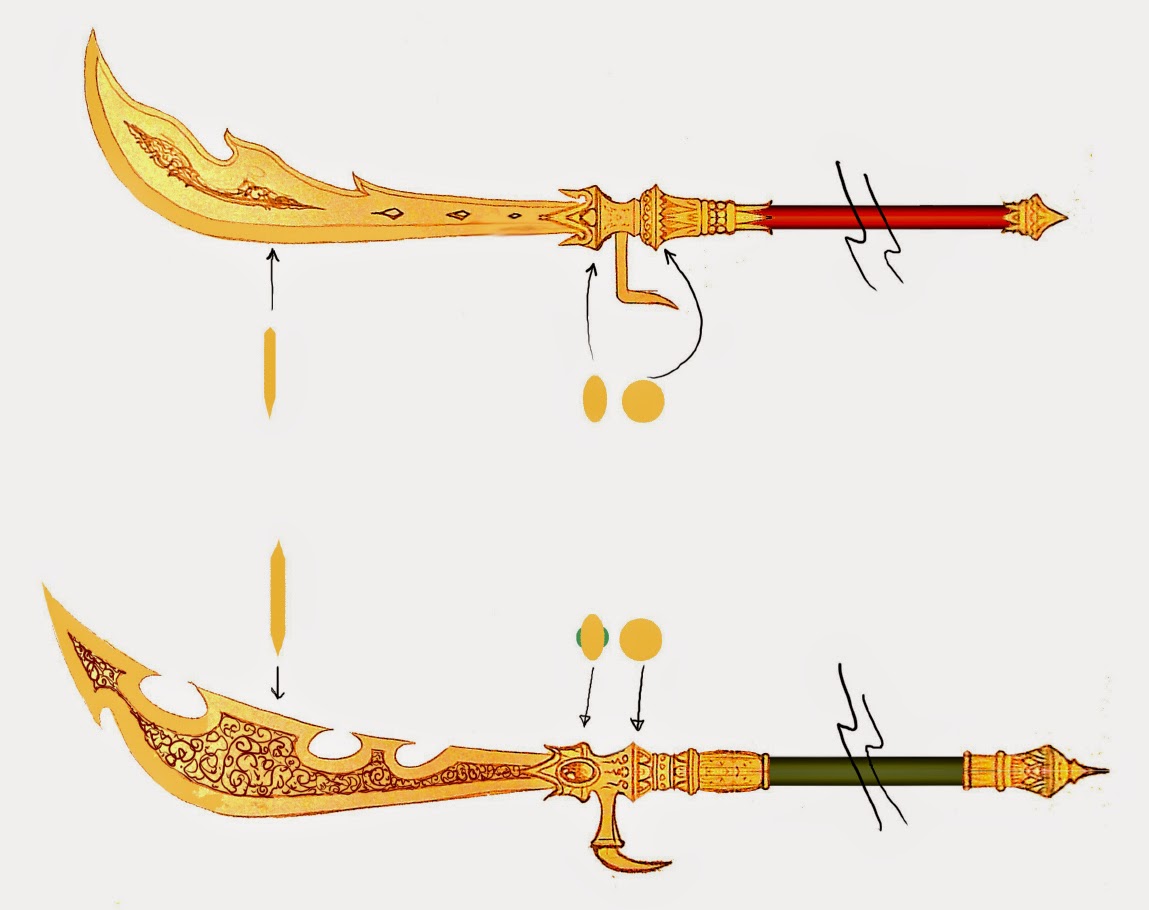
The designer, Tod Polsen,  had worked really hard to identify the elements of design to capture Thai culture. Tod is really good at being able to go to another culture and look at the accent of the culture and then simplify it and interpret it into design for animation and reflect the culture. The details of the swords demonstrating the subtle differences between the warring factions of the Burmese and the Thai. But it was something at the heart of the story, that maybe was not there yet in terms of Thainess. 

Tod was fully aware about the Thai cultural deference to the King, and he thus had tried to avoid dwelling on scenes involving the King. He had focused more on the elephants stories and their interactions, especially as it was Khan Kluay’s story. So the part with the war scenes, he had cut shorter and focused more into the elephant’s point of view.  In Thai historical dramas like the King Naresuan  films there seems, from a western perspective, a high content of violence an a focus on the waring action. Which by Western standards may seem inappropriate for children's audiences yet one can usually see a high turn out of families and children viewing the graphic actions. However the cinema ratings and censorship rules in Thailand have less emphasis on violence. It was felt the narrative did not show the Thai perspective enough. The Thai national and cultural relationship with (their version) of the historical past is ingrained into the cultural psyche from very early on, and so the events of the Ayutthaya war, defending (and building) of the kingdom, needs to be depicted in such a way as to be reinforcing the ideology of the events, the loyalty to the King and the understanding of the sacrifices made by past Kings in order to demonstarte it’s strength of Thai people as recognised in the eyes of the people today. In Thailand there are layers and layers of cultural reinforcements of the roles of past historical events, in particular of King Naresuan, seen in amulets worn, posters displayed in homes, street names, statues and in the main stream media, especially Film. The stories depicted never question the roles of the characters who rarley are depicted with the hero's character flaws as seen in the hero's journey narrative favoured in the West, nor are there analysis of the reality of events, but they are reenacted to maintain the enigma of the King, which is accepted in the culture. Unlike the West which appears often to delight in establishing as much dirt on it’s own past as possible. Within the culture there is a seemingly natural understanding of protocol of deference often so subtle that can be missed by outsiders eyes; and usually our clumsy indifference is passed over easily by Thai's who happily accept the complexity of ceremony they live by.
Comparably in Memoirs of a Geisha the story of a Japanese Geisha, the film reads clearly to outsider’s eyes, but to Japanese they can see the main character is Chinese not Japanese. Or in the for Thailand contreversial, Yul Brenor’s depiction of the King of Siam in the ‘King and I’, 

Black and white photo of a man with a shaven head in silky Asian garb; his chest is exposed and his feet are bare; he stands with hands on hips, glowering at the camera
Yul Brenor in the role of King Mongkut


which understandably caused offense and bore no resemblance to the Thai cultural understanding of the King Mongkut or the story. 
King Mongkut with one of his wives and some of his children

King Mongkut and his son Prince Chulalongkorn


Things may look or appear similar, but when you know the protocol codes, signals, body language and gestures of a culture the wrong sequencing, or positioning can stand out. Kompin decided to change some of the emphasis in the story in particular the part where Khan Kluay meets the King for the first time. Previously Khan Kluay and the king had not seen each other until he was grown up and went to the ‘boot camp’ to train and was picked to work with the King. So by bringing them together when they were both younger he was able to establish a through line in the plot that established  the magical presence of the King to the elephant. This reflects the Thai Buddhist concept that all creatures would come to no harm with Buddha and the King, who holds the same enigma of character of God in Thai culture. So in the scene Khan Kluay arrives all frustrated and nervous and he comes to see the young Prince he becomes all calm in his presence. Jai yen yen. 

                    http://www.dailymotion.com/video/xkzawr_meeting-naresuan_shortfilms

The scene is quintessentially Thai demonstrating the magical power of the King’s presence to calm the heart of the elephant. A scene where you have to feel it, feel the calm. This scene is then reinforced later when the elephant gets crazy, his mum has been captured, every thing has gone crazy and the King came and touched him, in a link moment which reinforced the earlier moment and sets up their linked destiny together. 

                 http://www.dailymotion.com/video/xkzawg_delivering-naresuan_shortfilms 
The Thai crew working on the film, when they design a shot, even when following the international design, they were automatically adhering to the Thai-ness. Setting the King above the elephant. They also helped in the setting of the scenery and environment especially with the foliage. They knew intrinsically what plants are from here so they are reflecting the indigenous environment more accurately.


When Khan Kluay was completed the boss wanted to follow on with a sequel, ‘Khan Kluay 2’, but Kompin did not want to continue with that.